
Current Mini ramps and halfpipes
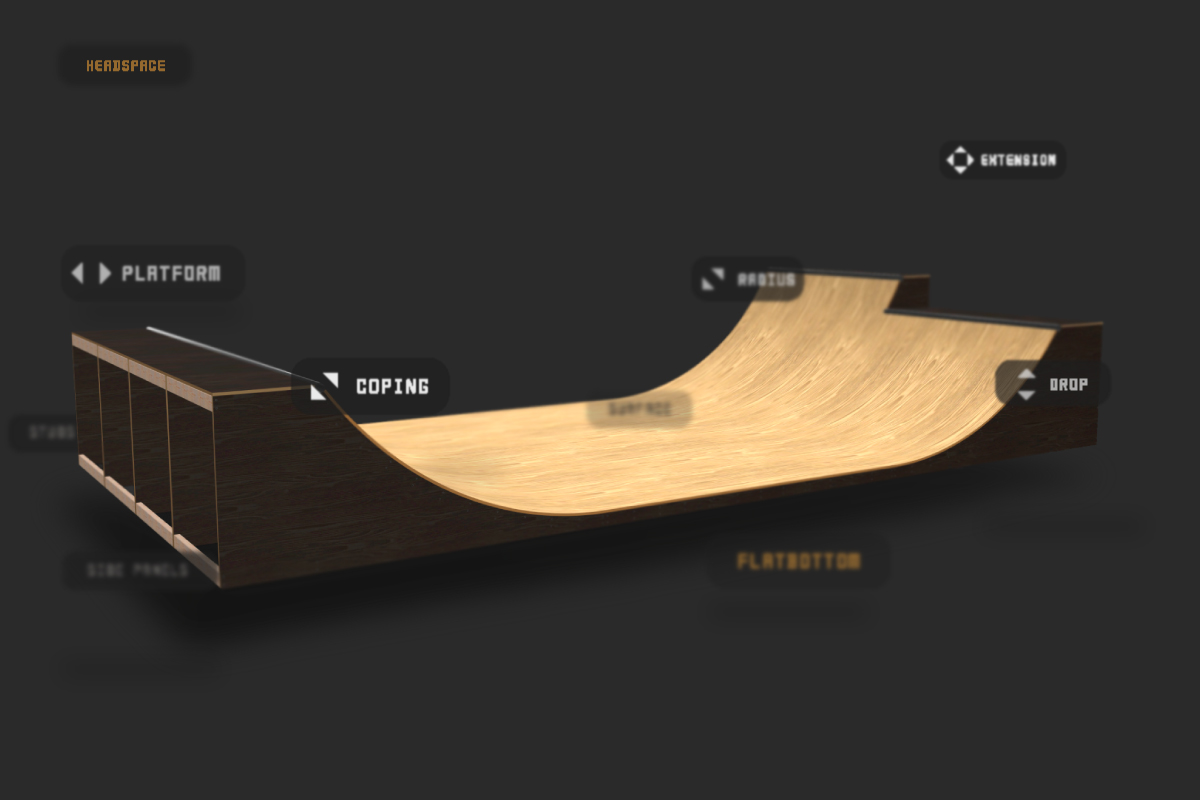
RampNerd is live today for custom mini ramps and halfpipes. Users can design in 3D, adjust dimensions, plan materials, calculate costs, and generate practical build outputs.
TRY IT
Open RampNerd

Projects save your design, materials, and prices—no spreadsheets. Change anything anytime; export when you’re ready
Remove the practical barriers that stop skate projects from getting built: unclear plans, difficult material planning, scattered build knowledge, limited budgets, and tools that are not made for real skate terrain.
Make skateboarding infrastructure easier to create through practical tools, shared building knowledge, clear ways to contribute, and active support for people and places with limited access to proper skate spaces.
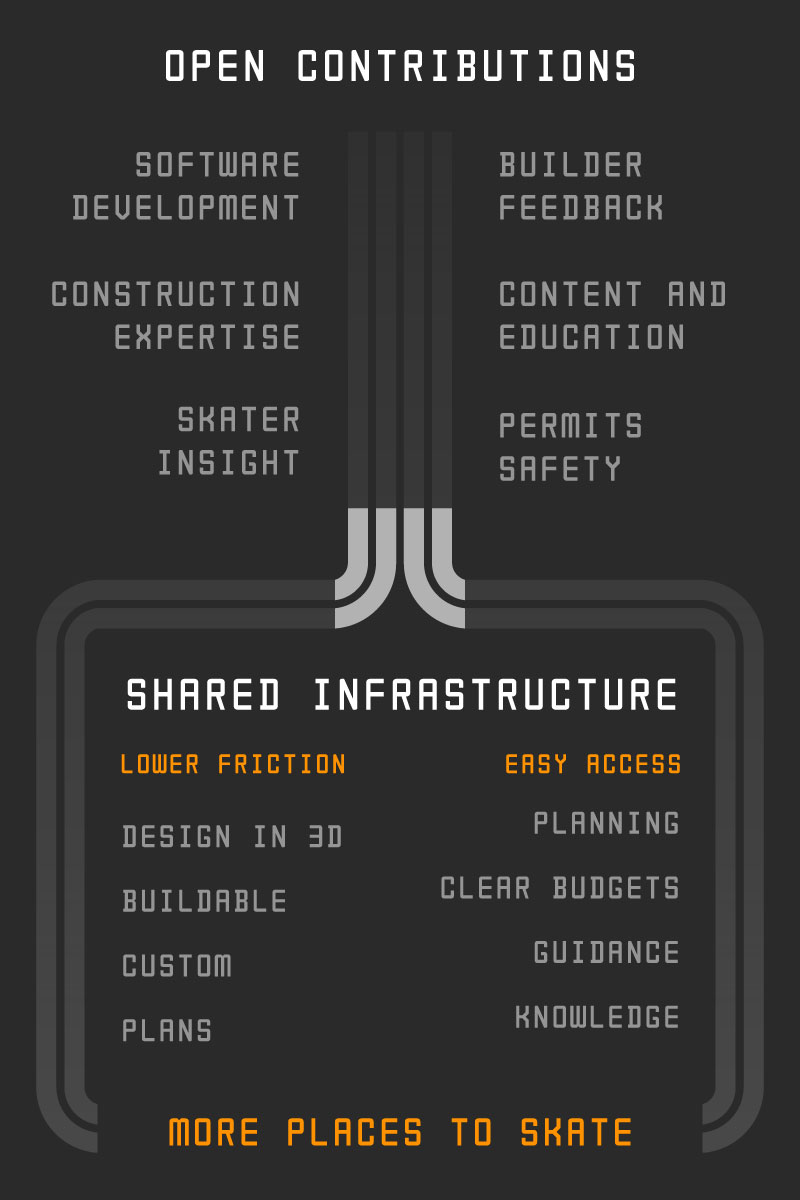
RampNerd was built by one person. That should not be how it stays.
The next step is building the contribution infrastructure, legal framework, and organisational structure needed to make RampNerd less dependent on one person, more reliable, and useful at a scale one person cannot cover alone.
Skaters, builders, engineers, developers, manufacturers, and communities will be able to contribute directly: build methods, geometry references, material data, regional specs, construction details, safety observations, and real-world feedback.
Contributions go through review before they enter the reference base.
The knowledge base opens first. The design tools follow.
Most small skate projects start with intent, not infrastructure: a backyard ramp, a DIY spot, a youth-club build, a community corner, or a local crew trying to make something skateable with limited money, tools, and guidance. RampNerd exists to turn that intent into clear design, material planning, build outputs, and practical construction guidance.
RampNerd is live today for custom mini ramps and halfpipes. Users can design in 3D, adjust dimensions, plan materials, calculate costs, and generate practical build outputs.
TRY IT
Open RampNerd
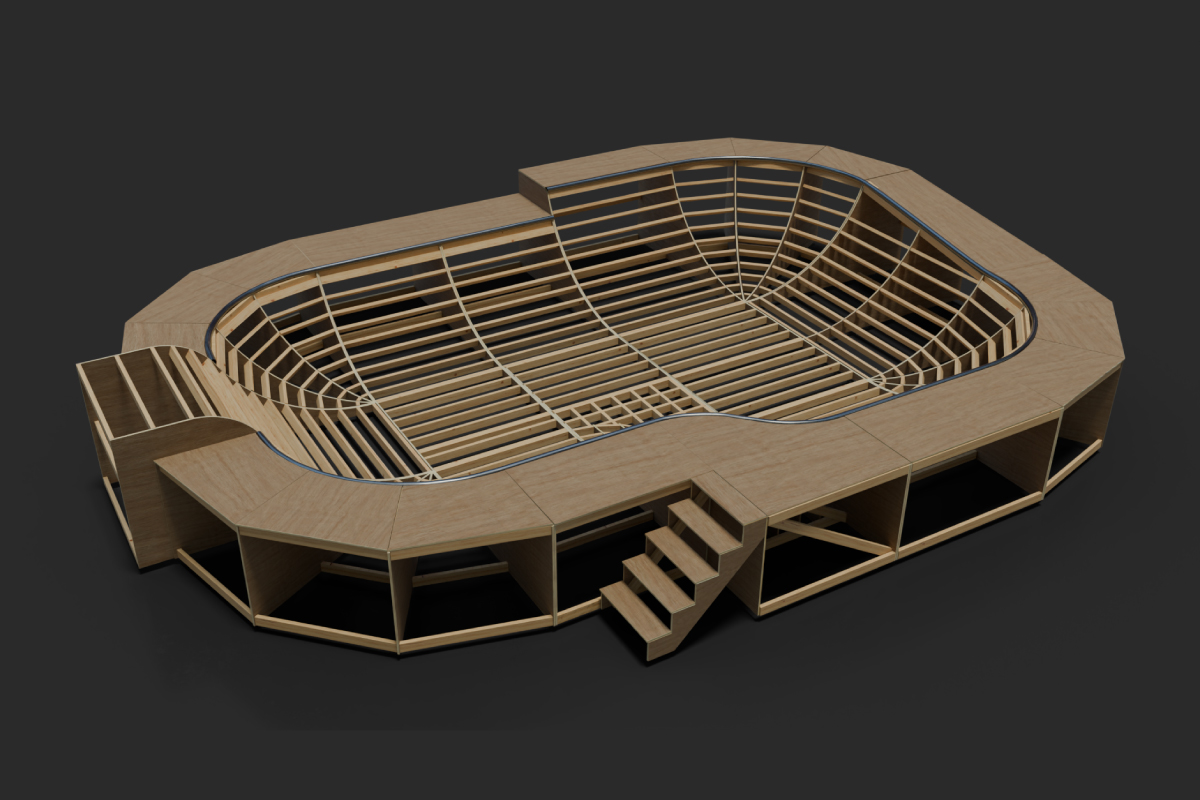
Enable full bowl design with buildable outputs for pockets, hips, curved corners, and connected bowl sections. Add support for bent coping, metal-fabrication-ready files, pool-block coping layouts, and installation guidance for ceramic, concrete, or similar coping systems.
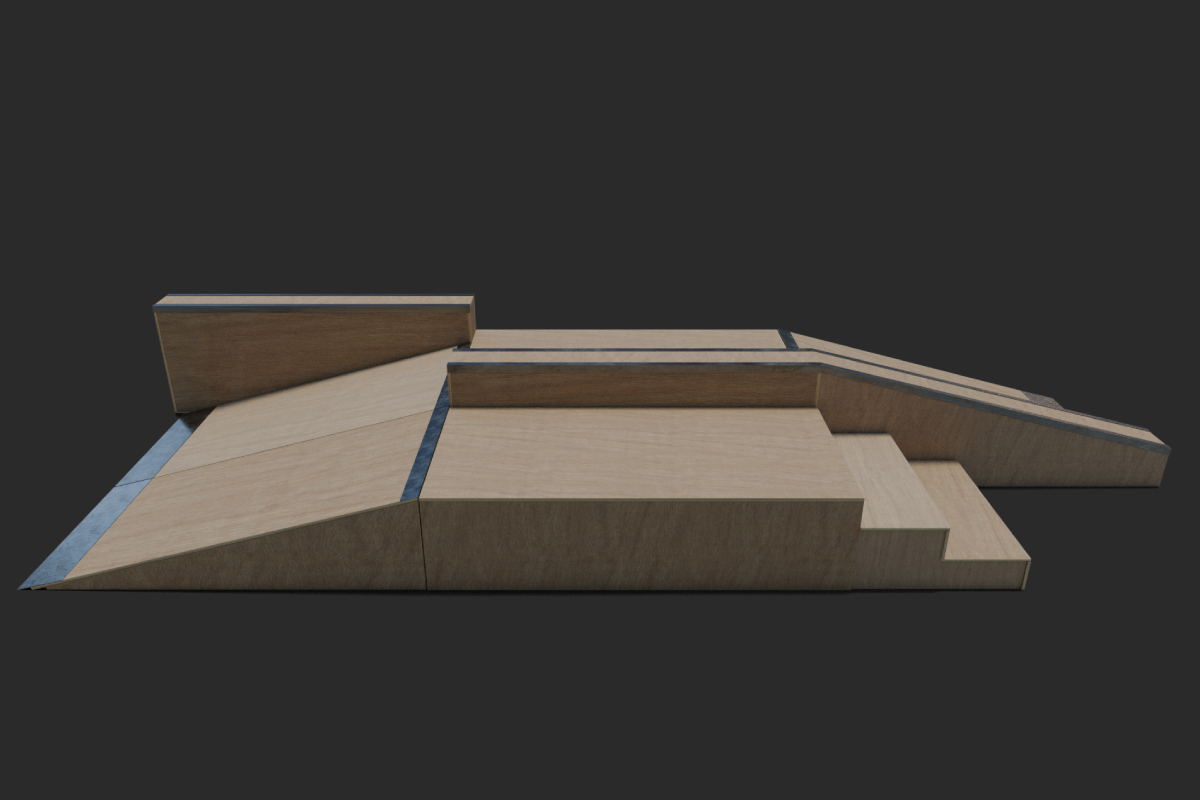
Enable multi-obstacle 3D layouts with quarterpipes, ledges, rails, banks, stairs, hubbas, manual pads, A-frames, pyramids, fun boxes, flow sections, and connected ramp elements. Support fixed, modular, and hybrid builds using the same RampNerd method: parametric design, material lists, cut lists, cut files, and build guides.
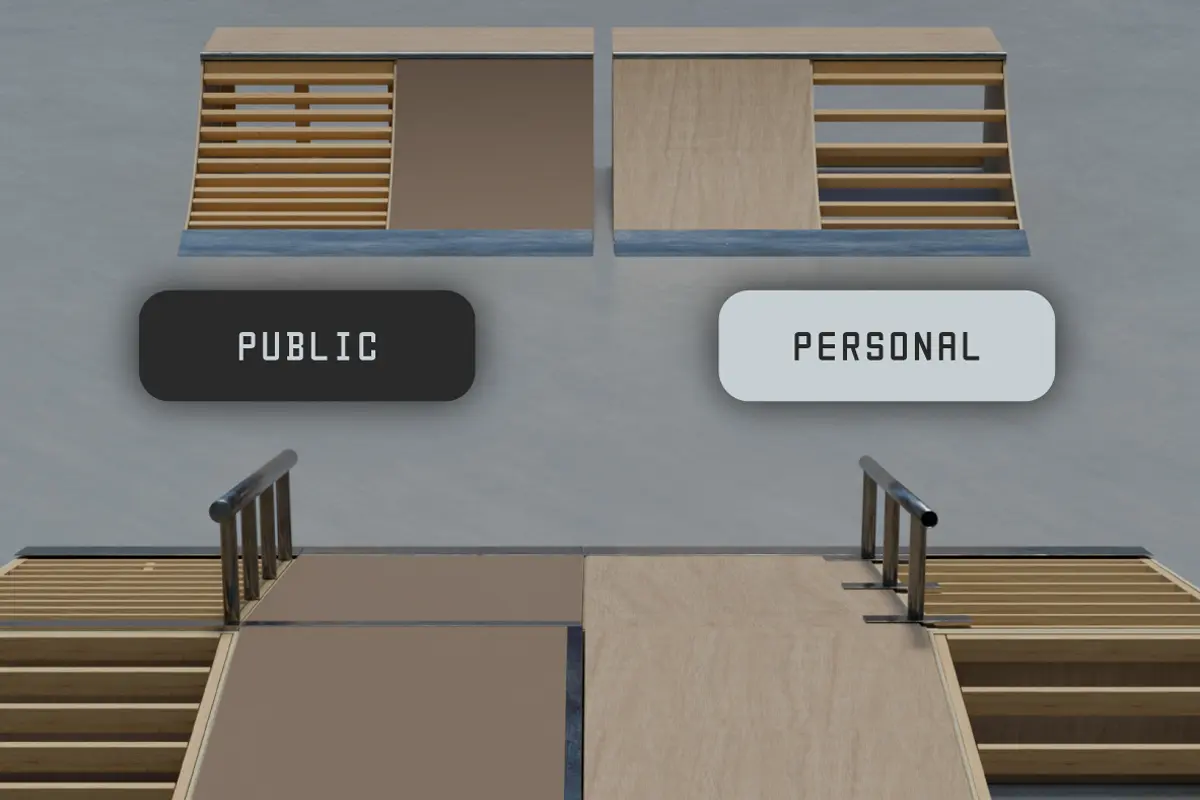
Add build guidance for both public/community use and private backyard use. Public skate infrastructure needs to handle heavier wear, repeated impact, weather exposure, and long-term maintenance. Private builds can stay lighter and simpler while still using clear, practical outputs.
Guidance for build quality, obstacle flow, skateable geometry, safe installation, and long-term use. Outputs should support stronger construction decisions, safer building practices, clearer maintenance, and awareness of local rules or permit requirements.
Extend RampNerd beyond plywood construction. The 3D configurator and build outputs will first cover ramps, bowls, and Street Kits in plywood, then expand toward concrete builds and locally available material systems for communities with limited access to standard materials or large build budgets.
Build a practical knowledge base connected to RampNerd outputs. Existing ramp-building guides are often scattered, static, and disconnected from real project dimensions, build types, and material specs. RampNerd will provide actionable manuals, guidance, videos, and dynamic build pages that adapt to the actual project.
Support youth groups, nonprofits, schools, makerspaces, and underserved communities that want to build real skate infrastructure. RampNerd can provide the design tools, project planning, material guidance, and build knowledge needed for community-led ramp and skatepark projects. Future pilots can connect skateboarding with CAD, budgeting, fabrication, woodworking, maintenance, and local ownership.
Short-term funding supports the practical work needed to move toward the open model: clearer UX, lower learning curve, better performance, stronger backend data management, reduced first-use friction, and a codebase that is easier to maintain and contribute to.
Improve the user experience, reduce ambiguity, and make the design process easier to understand. The tool should guide users more clearly through dimensions, materials, costs, outputs, and build decisions.
Let users start designing before they create an account. Sign-in should only be required when saving, starting a full project, or generating outputs.
Improve loading, reduce memory use, and make RampNerd work better on normal laptops, older machines, and lower-end devices. The app needs to feel lighter and more accessible.
Strengthen project data, account handling, file generation, storage, and export management. RampNerd needs a more reliable backend foundation before it can support broader use and outside development.
Move more of the interface out of Unity and into regular web panels. Unity should handle the 3D view, geometry, camera, and live preview, while the browser handles clearer forms, outputs, project pages, and build guidance.
Improve access and review the pricing model. Ramp plans should not be treated as disposable free files, but the tool must become more accessible to builders, small groups, youth projects, and communities with limited budgets.